Thursday, August 6, 2020

Flim-Flam! Book Report

For the book report, I decided to read Why People Believe Weird Things: Psudo Science, Superstition, and Other Confusions of Our Time by Michael Shermer. Michael Shermer is the President of The Skeptics Society and editor in chief of a magazine entitled Skeptic, which focuses on psudoscientific claims. Shermers book is divided into five sections, each of which focus on tackling the main question tackled in the title of the book. In the first section, he primarily talks about the importance of skeptisicm, and why it plays out in understanding what psudoscience is. This comes into play with analyzing the scientific method as well. The second section of the book touches on paranormal instances and many psudoscientific concepts associated with it. He points out that many of these occasions are linked wih cultural connections. The third section talks about creationalism and its impact on the United States. More specifically, he tackles how it has becomer so prominent and a primary counter argument to Darwinsism. In the fourth section Shermer goes in depth and writes about Holocoust deniers, and how their view of this is mainly incorrect. Finally in the fifth section, Shermer ties it all together by saying that even the smartest individuals can be fooled by psuedoscience and false claims. 
Personally, my favorite part of the book was the second section of the book, more specifically when he discussed the out of body experiences. He discusses how trauma, environment, and predisposed ideas can influence how an “out of body experience” can become something that immediately seen as fact or truth. Additionally, many of the things that were talked about in the second section can be viewed in correlation to cultural impacts and beliefs. Based on my own family culture and traditions, I dont believe that out of body experiences would be something that is immediately believed, but I can understand how other cultures could openly adopt this. For example, astral projection is an out of body experience that many religions and cultures identify with, and has recently seen a surge in interest on various platforms of social media. Astral projection involves an individuals “soul” leaving its physical body and entering an astral plain where the soul can temporarily roam freely in search of enlightenment. Since it was trending so heavily on social media at the time when I was reading this book, I found it even more immersing to read page by page. 
The concept of astral projection closely ties with dualism, which is a topic that we discussed in class. Dualism is the belief that the physical body and the spiritual being, or soul, are two different ideas and can be separated. Many believed this ideology and even to this day religions and certain individuals freely believe this idea to be true to its fullest extent. Part of believing in OBE is also believing in dualism, which I found to be very intriguing because I know some people who don’t particularly believe in the concept of dualism but do believe in OBE. 
I think about OBE and what Shermer talked about in his book and I apply it to my personal viewpoints and experiences. I personally have experienced one “OBE” that I firmly believed was one, but upon further thinking knew that it was not. It involved playing this strange game called red door, yellow door. In this game you’re supposed to visualize yourself going specified doors in order to open “the doors of your mind.” When I was young I played it with a friend, and got spooked when I “saw” something scary. The more I think about it though the more I realize it was more than likely me projecting my thoughts into a visualization in my head, rather than a OBE in itself, which at the time I thought it was. 
Below I found a video of Shermer himself attempting a “God Helmet” experiment in Canada. At the time of the video, it was believed that this simulated an OBE, but it was ultimately debunked in 2008.
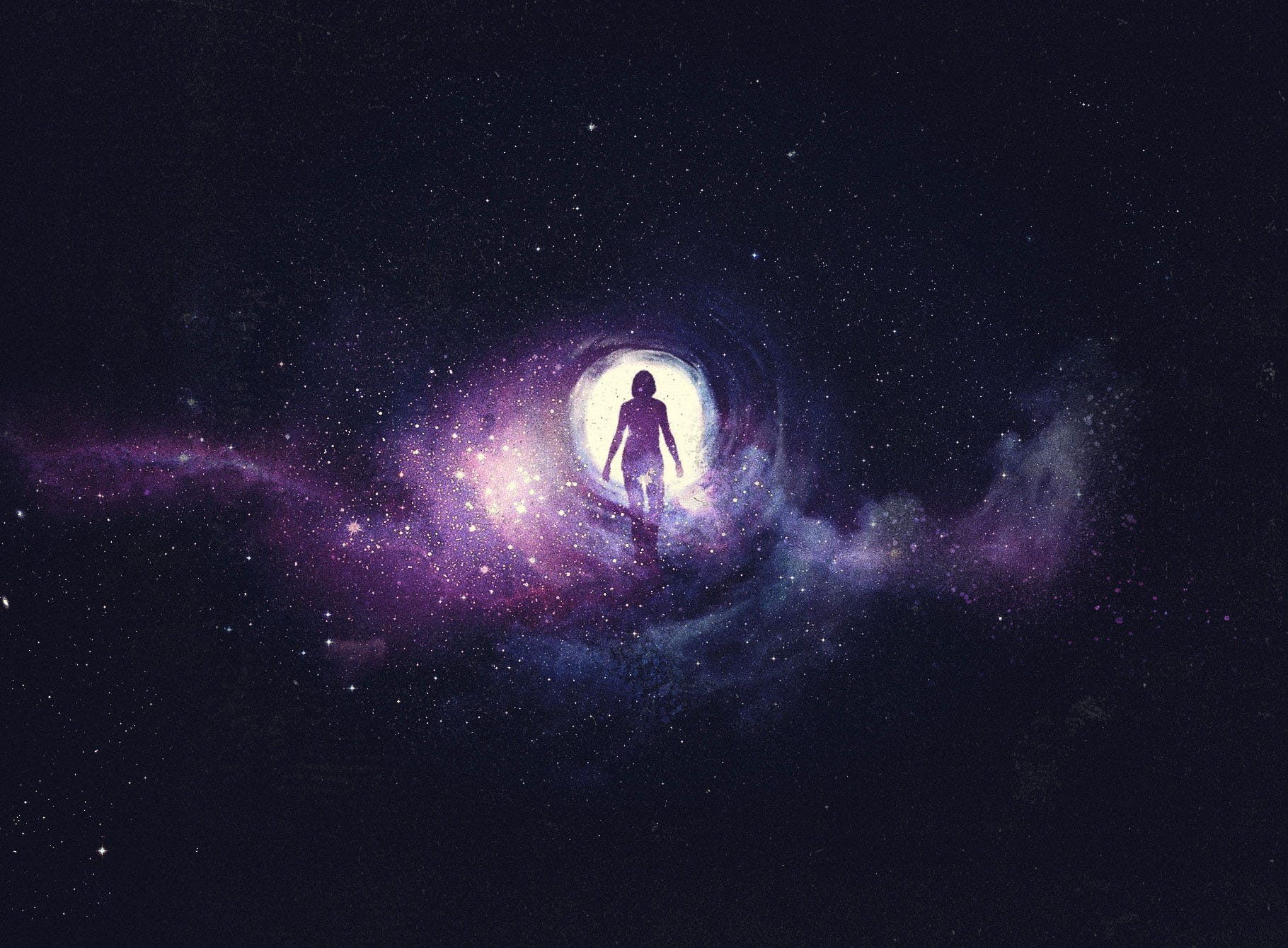
What many perceive OBE to look like.

Aromatherapy (Post 3)

As someone who uses essential oils and diffusers often, I found it really interesting to read about aromatherapy in our class. I primarily use eucalyptus for any times where my allergies get the best of me, and I use my lavender scent for relaxation and also because I enjoy the smell. I found it a little shocking that individuals use essential oils for things such as wrinkles, depression, and serious illnesses. To me, the eucalyptus provides me relief in my nasal passages that I can genuinely feel, and the lavender is because I associate the scent with relaxing areas like a garden. It makes a lot of sense though, how the benefits of aromatherapy can be generalized so broadly and then individuals find “remedies” with it.

OBE (Post 2)

During the lectures, the concept of out of body experiences were discussed in the slide shows. I found it interesting that many individuals found it similar or confused it with lucid dreaming. Whats even more interesting is that anesthesia was seen to have an impact on it, which was not the same for me. I recently had a surgery and have had many other instances when I was under anesthesia and each time I did not dream once. For me, the medicine goes into effect and then I immediately wake up, with no dreams or any understanding of what occurred. I have also read that many individuals face an “out of body” experience when faced with immediate trauma or distraction. 

Topic 3: Y2K

Y2K was believed to be the technological doomsday that was allegedly suppose to occur once the analog systems on computers switched over from the year ‘99 to ‘00. Apparently this change in format upon the new year was supposedly to cause mass malfunctions within computer systems across the world causing mass chaos ranging from mass downed airlines to accidental nuclear missile launches which would effectively grind human society to a halt. As a result of this widespread hysteria, doomsday preppers sprang to action by hoarding necessities and building underground bunkers to provide refuge for their families. Unfortunately for these dutifully workers, their efforts were never necessary as the strike of midnight fell that New Year’s Eve twenty years ago. However, there are plenty of other occasions coming up that might warrant the habitation of these doomsday bunkers such as the end of the world concisely predicted to end by famed astrologer Jeane Dixon anywhere from the year 2020 to 2037.

Hypnotism (Post 1)

Hypnosis is a topic that has always been of interest to me throughout my life. The idea of being able to connect with past lives has always been one of interest to me. In order to do so, the goal of the hypnotist is to get the individual into a state of mind that is easily guidable and malleable. During this, the hypnotist will push the individual towards recalling certain events that may have happened to them in a past life, and ultimately confront those traumas that may have passed over into their present. At first I used to see hypnotist as 100% fact, since I could not find any immediate answer to it, and my lack of exposure to hypnotism enforced this. As I have seen more and more examples of hypnotism, and even seen hypnotist “shows”, I have come to the understanding that the hypnotist does this guiding to pull an answer, especially in the shows. Every year, Stockton has a hypnotism show for freshman students, and I have become more and more aware of it. Interestingly enough, the hypnotist also refers to himself as a comedian too!


https://www.youtube.com/watch?v=16gaF1kprEc

Out of body Experiences 3rd Post

While viewing the lecture slides I was reading about out of body experiences and how most of them take place in the operating room. This was very interesting to me as I have had two major surgeries within the past year with heavy anesthesia. Although, I did not personally have an out of body experience I believe I had something very similar to or a variation of one . It was after my second brain surgery at Sloane Kettering and I was knocked out for ten hours. When I woke up I had brief memory of being awake during the surgery. This is obviously not possible, but I remember feeling as if I had been awake for some of it. It felt as if some part of my brain stayed awake for a couple seconds and I was creeped out when I first awoke. The surgeons assured me that there was no way I could have been awake during it as I underwent very heavy anesthesia. However, this did not put my mind to ease and to this day I am convinced that I had some type of out of body experience. It's not as if I saw my own body during this experience, but I remember feeling as if I had witnessed some parts of my surgery. To this day, I have not found a clear explanation for this and it still creeps me out sometimes. 

Topic 2: Aromatherapy

Aromatherapy is purported to utilize science and art to promote harmonious well being to anyone who partakes in the olfactory overload of scents that waft around you. Proponents of this all natural scent scenario believe that the sense smell is the quickest route to the brain and therefore indulging in the fragrances they have purposed helps soothes a problem is linked to the daily application of essential oils throughout a users day. However, while these calming lavenders and soothing sage aromas might be pleasant; there are no proven scientific studies that link the usage of essential oils/aromatherapy to the relief of pain or discomfort associated with the prescribed function of these practices. Surely it is nice to smell nice things and enjoy the comfort they bring; but to sell these products under the guise that they will soothe actual physical ailments is ethically and morally negligible. I work at a Whole Foods where they fully “drink the koolaid” in regards to the manly nuanced uses of essential oils and I believe it’s a total scam on lackadaisical millennials who buy into their scheme. After all, some of these essential oils they are selling cost approximately $15-25 a small bottle and claim to bring about clarity, resilience, or any other vague adjective that sounds desirable. I’m all for a nice candle to heighten the atmosphere of a room when company is over, but to claim such broad statements without anything to show is silly.

Topic 1: Chupacabra

The origin of the tale of the Chupacabra is one which illustrated a grizzly monster who maimed livestock and pets alike in Puerto Rico. However, since the dawn of this tale there have been mysterious attacks on livestock and pets in the Southwestern United States. Farmers and pet owners would report that these infamously elusive creatures had attacked and drained the blood of their victims for sustenance despite objective proof of the actual assailant. Believers of the existence of the Chupacabra believe it’s elusiveness is related to its apparent physical composition. It is reported to have the wily appearance of menacing blood thirsty rodent with the hind legs of a kangaroo which allegedly explains why so few have been caught. It is believed that the continued popularity of this fabled creature is correlated to the dissemination of disinformation on the internet in 1996 when information could be widely spread via the broadening increase in accessibility to the internet. I don’t believe that the Chupacabra is real at all, but I can certainly understand how difficult it is to dispel such deep rooted myths such as this one when the origination began well before people thought these rumors out thoroughly. It could have been much easier for simple townsfolk to believe that some fearsome sulfur scented beast is ravaging their farms than possibly a wild dog. As a result, this irrefutable use of fast thinking during those days gone by in Puerto Rico resulted in the menacing myth of the Chupacabra.

Wednesday, August 5, 2020

(Book Report) Factfulness - Hans Rosling

        Factfulness is a unique book that I thoroughly enjoyed. The book doesn't force the reader to read its entirety to understand its content. This method of writing enhanced my knowledge intake of each chapter and all 11 chapters discussed something different. However, as Hans Rosling would go in depth on a detailed argument, sometimes he would start to get repetitive. Hans would repeatedly use the same arguments for a couple of different topics and that stands out to the reader. Overall, the majority of the book was excellent. Hans's three topics that I enjoyed the most was generalization, fear, and negativity.
        In chapter six, Hans went into deep detail about the generalization instinct. He noted how people generally try to compare things that favor the persons own opinion. For example, if I liked lemons better than limes and wanted my friend to agree with me, I would instinctively compare a lime to something bad like an artificial piece of candy. This comparison would put the thought of limes being bad into my friends head, when limes are truthfully not that bad. Another great point in this chapter is the stretching of words that one can use when in an argument or discussion. Words and phrases like "for the most part" and "majority" are commonly used in opinionated debates. This happens because even if the person is wrong, they still want to fight for what they like based on their own experience or opinion.
        Chapter four talked about the fear instinct. Fear effects us in a couple of different ways. For example, there are two twin brothers that live in Wyoming and both of them have never seen or have been near an ocean. Both brothers look at the same article about oceans, but they each interpret that article in completely different ways. One brother focused on all of the negative circumstances of the ocean, such as sharks and rip-curls. The other brother focused more on the positives about the ocean, such as a fun time at the beach or surfing. The brother that focused on the negatives just developed a great fear of oceans, while the that focused on the positives did not. This development of fear can happen with almost anything. Some fears weigh more on a person than other fears do, but that's dependent on the amount of exposure that fear has on the person.
        My third favorite chapter was chapter two, which was on the negativity instinct. Hans explained how it is more instinctive for people to see things in a negative light, rather than positive. What happened to my girlfriend over the past weekend is a perfect example of this. Her car broke down and the engine light in her car turned on. Automatically, she assumes that she's going to have to pay a lot of money for an engine repair or replacement. As it turned out it was a very cheap fix, due to a antifreeze leak. People would rather focus on the worst case scenario, so they don't get disappointed in the future.
        To conclude, I'm glad that I've gotten the chance to read Factfulness. This book allows me to see things that are happening constantly, more clearly. It also taught me a few things along the way, such as knowing why people think the way they do and why fears aren't easy to overcome. If future pseudoscience and the paranormal students are reading this, I highly recommend this book. It will not disappoint!


The Jersey Devil

Before this class I had of heard of the Jersey Devil but never really knew exactly what it was supposed to be. My cousin had taken me to a spot in North Jersey where the Jersey devil had reportedly frequented. Although, the spot was eerie we ended up not seeing anything just how I predicted. But now after learning more in this class I feel like less of a skeptic about the jersey devil. To me, the background story seems far fetched even though it is entertaining. The odds of a woman giving birth to a creature with a horse like head and wings like a bat that allowed it to fly out of the chimney seemed unlikely. However, recreated "images" of the jersey devil sparked my attention. Although, the make up of the jersey devil seems like a mystical creature it really intrigued me. Tons of people in my home state really believed in the Jersey Devil which made me think about it in a different way. Perhaps the Jersey devil in itself wasn't real but the energy behind it was. I did some of my own research and some of the accounts of the jersey devil were very farfetched. To me this proved the creature did not exist but the fear behind it did. Perhaps there was an explanation for what the people had been really seeing. This made me think of the Chupacabras we read about that people feared in Puerto Rico. For years people swore that this mysterious creature was responsible for the killing of farm animals. Scientists later discovered that they were not actually chupacabras but abused Xolo dogs. That is what I think of the Jersey Devil, it is not actually the mystical creature, but another animal in disguise that is tricking people.

Alien Abduction

While viewing the lecture slides, I came across a video that really stuck with me. It was about a group of workers in the desert that saw an unrecognizable object and wanted to investigate. Before this class, I was not a huge believer in the alien theory and am still not. However, this particular instance made me second guess my beliefs. The man who went to explore the unknown object seemed really trustworthy to me. It seemed as if he wholeheartedly believed he was abducted by aliens. When he went to check out the supposed "aircraft" his friends and co workers abandoned him. He went missing for days and was found at a completely different location than where the sighting had taken place. But to the man it felt as if it had all happened within the same night. When he reached out to his family from a payphone they told him he had been missing for days. Of course afterwards, skeptics called him a liar and that he hallucinated the whole thing because of drug use. To me this seemed unlikely because the workers he was with had the same exact story he did leading up to the "abduction". In addition, the Sheriff from the town where it took place recalled how shocked and scared the other men were while they were being interviewed. Overall, this video changed the way I look at alien encounters and stopped me from being a complete skeptic. 

Tuesday, August 4, 2020

Aliens (Post #3)

The question, "Do you believe in aliens?" has been said to everyone at least once in their lifetime. According to New York Post, around half of the humans on Earth believe that aliens exist, while the other half does not. Personally, I believe they do exist. Assuming that space is constantly expanding, there is and will be an infinite amount of space, meaning that a replica of this world we call Earth isn't too far-fetched. In my opinion, space is way to gigantic for Earth to be the anomaly for life. Another huge misconception among humans is what an alien would look like. I feel as though most people would expect to see a gray or green alien if we ever came into contact. Also, most people really don't think about how an alien could be just any living organism that doesn't come from Earth. Aliens don't have to resemble the shape or form of a human. An alien can look as small as an ant or as big as a whale. This article linked below, describes how some aliens would look depending on their ecosystem and geography!


Hypnosis (Post #2)

The action of hypnosis seems to be feared by the general public, simply because most people don't actually know what it is or how it works. Hypnosis is when a person is in a state of consciousness and then lose their power of voluntary action. Making them highly receptive towards outside direction and suggestion. The motive of hypnosis is to find and recover suppressed memories, to heal them. Although, sometimes this directive does not always get achieved. Sometimes therapists can create memories that never happened, due to how overpowering their influence is on their hypnotized client. Therefore, the general public may have the right idea to be frightened by hypnosis.


UFO's / Abductions (Post #1)

Their have been hundreds of alleged reports regarding the sightings or experiences of UFO's and abductions. When people read these reports and articles, they are instantly finding themselves looking for reasons why this can't be and I am one of those people. From what I've seen, the most substantial motive for these extraterrestrial reports and articles is television ratings. News channels will take these reports and forward them for the world to see. Obviously, everyone is going to be at least a little bit interested in a news headline that contains the words aliens, UFO, or abduction. Nevertheless, these reported UFO and alien abductions all cannot be proven, as they are mostly from alleged eyewitnesses that tell the tale.


Post #2: Aromatherapy

Aromatherapy, also known as essential oil therapy, is a holistic treatment method that uses natural plant extract to help improve one's physical health as well as emotional health. I am familiar with the term aromatherapy and have heard about people using scents such as lavender to help them destress or to help them sleep. I personally have never tried using essential oils to get these benefits but I was given a candle for Christmas from Bath&BodyWorks and it has a label that claims it is scented with black chamomile and natural essential oils to help you relax. I’ve used it multiple times however, I wasn’t noticing any changes and I didn’t think I was feeling any more relaxed than I typically do. I never really believed that essential oils could be effective in helping with things like memory or pain but I always thought that they could at least be used to help boost one’s mood or to help someone relax. After looking at the lecture for the class, I realize that there is no evidence to support the broad claims made by aromatherapists and that essential oils don’t seem to have any benefits at all. I don’t see any harm in someone using them if they really believe it helps them with their insomnia or stress however, I don’t think anyone should rely on them or use them for serious injuries instead of receiving care from a doctor. 


This is the candle I have that claims that it has natural essential oils to help promote relaxation. There are also several other kinds that claim to provide different benefits such as stress relief and energy.

Black Chamomile Single Wick Candle - Aromatherapy | Bath & Body WorksOrange Ginger 3-Wick Candle - Aromatherapy | Bath & Body WorksEucalyptus Spearmint Single Wick Candle - Aromatherapy | Bath ...

Book Report: The Demon-Haunted World (Science As a Candle in the Dark) by Carl Sagan


    Carl Sagan starts off the book by introducing his fascination to science as a child and how the World Fair and the ideas of using science to create a "Jetsons" world was something that was exhilarating. He also mentions an experience he had with a driver who asked him questions that were obviously pseudoscience and when he mentions Atlantis or the Bermuda triangle, he ponders at why people would rather be more excited about magic crystals and missing aircraft instead of using science and being more fascinated about physics and why gravity is more fascinating. His book literally debunks and makes readers question why something so massively popular in belief, like miracles or aliens, is a better explanation to things than science itself. He provides a lot of examples and a variety of beliefs that people usually hold and also provides facts and history of scientific breakthroughs. Sagan touches so many myths and topics but it was a read that is worth considering and I believe will always be relevant for years to come. Unless, everyone begins to rely on science more instead and approaches things with a more scientific approach.

    Although I do believe science is something that can solve a lot of unanswered questions, there is a small part of my mind that thinks there are things that cannot be explained through science. Things that are philosophical are definitely a topic that cannot be measured through scientific graphs and calculations but I believe that most people should allow to be open to science as apart of their lives. There are people who are completely consumed by a certain belief or religion and do not even consider science as an explanation. I enjoyed reading this book because it challenges the myths and legends that I also used to believe when I was younger. You do not have to be a scientist or an engineer to really think this way towards the ideas of ghosts and demons. As long as you think realistically then you can really rid most of the things that we mostly fear. This book  really screams "knowledge is power" and I like how it encourages people to really question theories and to actually test and assess as well as challenge things, apart from being a sheep and following what majority of the population may think. The number one thing that really stood out to me is when Sagan says that believing in things like the Earth being flat or that witches are the scapegoats for things just makes humanity move backwards. If we approach things more with a scientific perspective then we can move forward and maybe even achieve amazing things. 


The Demon-Haunted World 2 - Home | Facebook

Monday, August 3, 2020

Topic #3: Graphology

This was a fun lesson to learn about. I have very small, close together handwriting. Teachers always used to ask me to type my papers instead of writing them because they could never read it. According to the Buzzfeed video, that means I am shy and keep to myself. But, for the close together handwriting it says I like to be around people. They are both very true. When I am around people I do not know, I keep to myself and do not talk. However, when I am around friends and family, I like to be the clown and make people laugh. So, this lecture may be true for me,  but I do not think it is true for everyone. It almost makes me think this is like astrology. People just so happened to know what each of these things mean to a person's personality. I would be lying if I said I was not skeptical. 

What if We Could Use More Than 10% of Our Brain?

This topic intrigued me the most out of all. I watched the film Lucy not too long ago, so when I saw we were discussing it in this class, I was excited. In all honesty, I think it would be dangerous if we could use more than 10%. Although movies are very dramatic, there are some things that could be true. This may sound crazy but where I am from we say that the "crackheads" or people who are always high on the streets, have superpowers. There are videos across the internet, including the one below, where people who have injected drugs and became extremely strong. They even have such high adrenaline that they do not feel pain for a long time. This is similar to Lucy because she had a bag of drugs in her stomach and that is how she gained access to more of her brain. So, this brings the question that maybe people who are high or seem delusional when on drugs, are using more of their brain than us ten-percenters? It is possible that we think they are crazy only because we are not at their brain capacity. It is definitely something worth thinking about. 

https://youtu.be/XlaFK0cUjD4

Post #1: Chupacabras

I must start off saying, I did not think this class would discuss chupacabras. Growing up in a Spanish household, my grandparents would tell stories about the chupacabras to scare us. I compare it to some kids thinking there is a monster in their closet. Well, I though the chupacabras were in my room. My grandparents live on a farm in Honduras and every time I came to visit, they would tell my brothers and I that the chupacabras would eat us if we went outside at night. Some people in my parents' hometown still believe they are real, but I have grown to think they are a figment of my imagination. I must say though, the photos are very similar to what I had imagined they would look like. 

Post 3- Learning Styles

As a teacher in the making, I've always learned about how each student has a different way that they learn best. Even going through school myself I've taken many different learning style tests to help me and my teacher understand what type of learning style works best for me. I think it's an important thing to understand if you plan to be in education which is why I was surprised when I got to this lecture. After further research it was interesting to see the reaserch provided by 5 different studies (Tarver and Dawson, Jenkins and Arter, Kampwirth and Bates, Kavale and Forness, and Snider) confirmed that there was little to no academic improvement in students who were matched by their modality strenghts. I always was a visual learner, and know that I can attain information better when its from a video or written on the board. But now I question whether it actually bennefited my learning in any way or if it simply easier for me to retain information that way. It appears that instead of trying to match a child to a learning style, it would be more beneficial to provide a little of all the different methods as students will have a learning preference which can help promote academic success, but to focus solely on a child's learning style will not be beneficial for their education.