Saturday, August 5, 2023

Lecture 1-10

 Lecture 1: 


In Lecture One, we learn about the different ways of thinking. Automatically and effortlessly is how “we think.” Some examples mentioned in the slides were, “How old are you?” or “How did you get home?” However, it is much more complicated than that. Fast thinking, which is biased and fallacies, combines four different ways to do this. Slow thinking touches the surface of a critical thinker. The three kinds of thinkers are mentioned and explained in detail with a video following. My favorite to learn about was the Selfish Critical Thinker. Although some people may want to believe this is not their thinking process, but it can be applied to others. Understanding and comprehending the different ways of thinking to analyze oneself and others is important. As the first lecture for an introduction for this course, I believe that it goes over multiple different ways to think and gives the students (me) the opportunity to dig further into definitions of Pseudoscience and the paranormal. 

*All work cited from Professor Bergs Slides- https://sites.google.com/view/markspsychology/Home/psedoscience-the-paranormal-gss-2148/gss-2148-lectures *


Lecture 2: 


Lecture two was extremely interesting to me because before going to Stockton University, I would joke with my friends about the Jersey Devil and how it supposedly lives in South Jersey. My boyfriend, who is a South Jersey resident, lives on a farm, and for the first few months we were dating, I would always tell him that the Jersey Devil lives on his farm. I learned about the Jersey Devil in High School and actually did a project on it, so I was happy to see that this course went over it. However, in the slides was a clip of an old newspaper where the Jersey Devil is blurred in Galloway, New Jersey. This was interesting because I had no idea where I attend University, where people believed the Devil was living. However, the Chupacabarcs were not something that I was familiar with. Overall, I enjoyed all of these stories as I was somewhat familiar with the legends, the history and the backstories of them were very interesting to me. 


For anyone interested, there is a restaurant in Little Egg Harbor, about 25 minutes from the school there is a small restaurant called Lucilles which they advertise it being home to the Jersey Devil. There's a sculpture of the Devil outside of the restaurant. Pretty cool to check out! 

*All work cited from Professor Bergs Slides- https://sites.google.com/view/markspsychology/Home/psedoscience-the-paranormal-gss-2148/gss-2148-lectures *


Lecture 3: 

Out-of-body experiences in Lecture Three were fascinating to me. I do believe that somewhere someone definitely is able to access the 10 percentile of their brain. Although rare, there are people that make attempts at telepathy and other things. I did not know that Plato, a known scientist, had commented on out-of-body experiences. “Body is a vessel containing a soul.” (Plato 5th Century BC). In conclusion, both of these lessons were very different and not what I was expecting with this class but I can connect it back to the main ideas and understand why its crucial to appreciate out-of-body experience and the 10% of our brain. 

*All work cited from Professor Bergs Slides- https://sites.google.com/view/markspsychology/Home/psedoscience-the-paranormal-gss-2148/gss-2148-lectures *

Lecture 4: 

In 2012 I remember being in school and hearing rumors of “the end of the world.” I was very young (9 years old) and not fully understanding what this meant. As I got older, I learned a little more about why people thought the end of the world was coming but I couldn't appreciate it at the time. I never wanted to think about the end of the world because of the uncomfortableness behind it. It was really intriguing to learn about the different kinds of theories that other people came up with about when the world is “really” going to end. 

*All work cited from Professor Bergs Slides- https://sites.google.com/view/markspsychology/Home/psedoscience-the-paranormal-gss-2148/gss-2148-lectures *


Lecture 5: 

In Lecture Five, subliminal messaging and the Mozart effect are discussed. Mostly subliminal self-help and the role of replication in science. It is understood that the Mozart effect should no longer be used, and society should come up with another source of replicating correctly for science-based procedures. After reviewing the slides, I was surprised to learn of the differences and similarities I was able to make. 

*All work cited from Professor Bergs Slides- https://sites.google.com/view/markspsychology/Home/psedoscience-the-paranormal-gss-2148/gss-2148-lectures *


—-----------


Lecture 6: 

Lecture 6 is about psychic crime detectives and starts off with the disappearance of Charles Capel. Capel had gone missing for months. Noreen Reiner had made attempts with her “psychic” abilities but she was wrong, it was vague and inaccurate. If psychic crime detectives were able to be accurate, then using it for missing persons or solving a case would be an extreme help, but so far, to my knowledge and in the slides, there was nobody who was able to do it. This is intriguing because people who get psychic readings done believe that what they say is 100% the truth, this is tricky and sometimes dangerous. 

*All work cited from Professor Bergs Slides- https://sites.google.com/view/markspsychology/Home/psedoscience-the-paranormal-gss-2148/gss-2148-lectures *


Lecture 7: 

In this lecture, I learned a lot about different types of learning styles, visual, auditory, kinesthetic, and craft versus academic knowledge. I was also able to learn about the Florence False Interpretation study. All things in these slides were interesting to learn about and I was able to make multiple connections between my learning styles as a student and my memories of recalling past events of what I can and cannot remember. 

*All work cited from Professor Bergs Slides- https://sites.google.com/view/markspsychology/Home/psedoscience-the-paranormal-gss-2148/gss-2148-lectures *


Lecture 8: 

I can identify my father's handwriting, my mother's, and my sister's all differently based on their handwriting. I have also noticed that my handwriting has changed as I get older. I appreciate the traits and studies this particular graphology makes on history. It is a good way to identify people and figure out some things about them before speaking a word to each other. 

*All work cited from Professor Bergs Slides- https://sites.google.com/view/markspsychology/Home/psedoscience-the-paranormal-gss-2148/gss-2148-lectures *


Lecture 9: 

This had to be one of my favorite lessons by far. I was fascinated by the different kinds of aliens and UFOS when I was younger. Learning about this was a really unique experience based on my background in the topic. People worldwide have reported seeing these mysterious objects, and authorities, groups, and researchers have conducted investigations into UFO sightings. Even after extensive research, certain cases of UFO sightings remain unsolved, despite the vast majority of them having conventional explanations. The idea of extraterrestrial life invading Earth has sparked curiosity and interest in response to these unexplained occurrences. 

*All work cited from Professor Bergs Slides- https://sites.google.com/view/markspsychology/Home/psedoscience-the-paranormal-gss-2148/gss-2148-lectures *


Lecture 10: 

I absolutely LOVED that the Salem Witch trials are a slide. The history of the Salmen Witch trials is just mesmerizing. It is insane that people believed these women to be witches. The accusations and the hysteria at the time were probably incredible. In conclusion, aroma therapy and the mass delusions are important in factoring in pseudoscience and the paranormal. 

*All work cited from Professor Bergs Slides- https://sites.google.com/view/markspsychology/Home/psedoscience-the-paranormal-gss-2148/gss-2148-lectures *


Book Report Post


"Going Clear: Scientology, Hollywood, & The Prison of Belief" by Lawrence Wright 

General overview: 

The book “Going Clear” by Lawrence Wright discusses an in-depth look of Scientology and what this type of cult-like religion is about. The first part of the book describes the founder of Scientology named L. Ron Hubbard. Hubbard invented Scientology through his work as a science-fiction writer. Wright describes Hubbard as someone who was suffering from mental illness and was abusive toward his family. His reasons for creating Scientology were to make everyone seem like he was creating a better life to the surface for anyone who joined, and not letting them understand the true meaning of Scientology until they had spent some time in to learn about a science-fiction sounding story with a galactic overlord named Xenu. His other reason for creating Scientology was part of a scheme that would make him and his religion very wealthy by taking payments from members of the group. Hubbard welcomed celebrities to join Scientology to use them to expand both financially and using them as spokespersons. Celebrities such as John Travolta and Tom Cruise have been known members of Scientology.

After Hubbard passed away a new leader named David Miscavige replaces him as the new face of Scientology. Miscavige carries the torch and stands by everything that Hubbard believed in. Once Miscavige takes over, the reader gets more of an insight into how members of the church are treated. Children that belong to the church are forced to work for them and not go to school. Ex-members of the group described Miscavige as causing physical harm and immoral punishments to anyone that questioned the beliefs of the church. If family members were shunned from the church or deemed a suppressive person, their families have to disconnect from them as well. Miscavige would attack anyone to better Scientology, especially the IRS to make their organization tax free. Though they declared their organization as a nonprofit, it is hard to believe this to be true as of all the money they acquire and spend. Miscavige was able to succeed in getting what he wanted through the church being protected under the first amendment and brainwashing all members into giving the church donations, and in return, they have the answer to everything these members could ask for.

Favorite Part:

My favorite part of the book was the clear indication that the members and celebrities like Tom Cruise were being brainwashed by having the leader of Scientology make them believe anything they wanted. The overall goal of Scientology was to give the illusion that anyone who joined would be saved and people saw the answers to issues so vivid and clearly. Behind the scenes, the church would eventually corrupt them. The part about controlling the members was my favorite because the reader discovers the intentions of the church, and how they plan to use their manipulation for the greater good of Scientology. This is the part where the cult-like behavior appeared more dominant.

 I thought it was interesting to see the steps these leaders of Scientology took and how they manipulated the members to get exactly what they wanted. They state an issue that relates to the specific member and how they can fix that problem. They claim they have all answers, and they can cure mental illness or an answer to anything wrong in the world such as war and violence. They keep hidden the upper tiers of the religion to make people believe there is an ultimate answer that the average individual could not handle yet. The organization then has its members so brainwashed that they feel obligated to give donations to Scientology of thousands of dollars. People even accept getting punishments and beatings from this church. This part aligns with what we learned in various lecture slides of someone who believes myths to be true such as using tricks to believe in a creature or an illusion that one has psychic abilities.

Related:

The book Going Clear relates to our lecture of using ten percent of our brains and out of body experiences. On top of the variety of beliefs and practices they perform, Scientology’s main belief is that humans are immortal. It is discussed that the spiritual being of Thetan is the spirit of the body and commands the vessel. Scientology also believes that individuals have suppressed power, like the idea of people only using ten percent of their brain. The church believes that they can gain their full potential if they are cleared of impurities, like the idea of becoming perfect versions of themselves by activating a higher percentage of brain power. Much like explaining the real reason behind telekinetic ability, taking away the tricks and illusion and you are left with the truth. Scientology claims to be backed by factual information but there is nothing that is compatible with scientific method.

Creative:

Below is a link to a screencast of the website of Scientology. I delved deeper into how they reach out to new members of the group. It is interesting to see how positive everything is on their website and how it is straight forward that they have the answers to fix common issues in the world. Much like what Lawrence Wright was explaining in the book. Their intentions are to bait in new members by showing positivity and by joining Scientology, all problems will be solved. I have also included a link that discusses some facts of Scientology and the type of scary cult that it is.

Screencast

Facts of Scientology as a cult

Extension:

Thinking of this book outside of class, it brings up a real-world problem which in this case that many people seek things to make them feel better, things that make sense to them, or ways that they can benefit and get a sense of belonging. Scientology wants people to believe that they have all the answers to many unsolved questions and issues to the world. We as individuals need to find answers and seek help when we are struggling. If something seems too good to be true, then it usually is. Scientology touches on current issues in the world like relating to people with mental health issues and drug abuse problems. They want the public to believe that their organization can cure people struggling with mental health and other issues they face in the world. What is crucial is the public need to see through this scheme and know that cult organizations like this are not really interested in bettering the lives of others. They are filled with greed and only want to benefit themselves, as well as their organization. The evidence that backs up David Miscavige and Scientology’s great is the net worth of being worth at least one billion dollars.

 Going Clear by Lawrence Wright can help solve the current issue because it calls out Scientology for the cult that it is and ensure that the past members voices are heard about the lies, abuse, corruption, and manipulation that is behind Scientology and David Miscavige. There are many organizations and affiliations like Scientology in the world, and Lawrence Wright addressed the issue at hand with Scientology through the book Going Clear.

Jersey Devil


 If you grew up in New Jersey chances are that you have heard of the Jersey Devil. The Jersey Devil has become a part of local New Jersey culture, with various accounts and retellings of the legend being passed down through generations. The creature remains a mystery and continues to capture the imagination of people interested in the paranormal and cryptozoology. What is so incredible to me about the Jersey Devil is that there were so many witnesses to this creature in which everyone saw about the same thing. Police even tried to shoot it down in a failed attempt. For an entire week everyone's livestock was found slaughtered. A woman also claimed that it was attacking her dog and she hit it in the head and it flew off.


Photo link - https://abcnews.go.com/US/man-claims-photographed-mythical-jersey-devil-legend-dating/story?id=34442356


Friday, August 4, 2023

Viral BS Medical Myths and Why We Fall for Them Book Report

 General Overview 

Viral BS Medical Myths and Why We Fall for Them written by Dr. Seema Yasmin explores a handful of medical myths which have circulated throughout society, affecting how people live their daily lives in a “post-truth” world. Dr. Seema Yasmin exposes the truth behind these ideas of pseudoscience, clarifying whether or not they are accurate from a medical standpoint. This book covers various ideas such as whether or not mothers should eat their baby’s placenta and the harm that could occur if done. Another chapter talks about suicide and if it is contagious. The way the media depicted these reports on suicide made individuals feel that this was a valid option, showing how specific language and portrayal in the media heavily effects people’s mindsets and decisions. 


The main purpose behind this novel is to bring awareness to the false information that is spread throughout social media and our everyday lives. Dr. Seema Yasmin wants us to ask questions and be more skeptical of the information we are fed. This allows society to double check these medical myths and pseudoscience and develop our own thoughts and decisions. 


Favorite Part 


One of my favorite parts of this book was Chapter 40, “Is it dangerous to go to the hospital in July?” because it sounded absurd but after reading, it made sense why this was even a question. There is a myth that says to avoid the hospital in July because this is when doctors who are just out of medical school are given bigger roles. Through research, it was found that there were different factors such as changes in the amount of hours trainees could work which affected this data (Seema Yasmin 216). But ultimately it was found that in July if a patient were high-risk, they faced the same risk of death at a teaching hospital than a nonteaching hospital. To compare, in any other month, this high-risk patient faced lower risks of dying in a teaching hospital than a nonteaching one. In July they are even. A lot of this is based on the idea that those in training do not have as much experience which affects their performance. 

This chapter closes out by saying “The July effect really refers to a patient’s perception of mistakes made by medical professionals as an influx of fresh faces floods the hospital” (Seema Yasmin 218). This statement reminded me of the different Heuristics we learned about in this course. This one would be considered a Confirmation Bias. Because these patients already believe that because these doctors are new, they are inexperienced, this means more mistakes will be made. Since this mindset is created, they will believe July is a bad time to be in the hospital. They will lean towards the information or data that proves their beliefs. I enjoyed this chapter because I thought it was so random and never realized this was a myth that people had. It is interesting to hear how these types of myths have a sense of control over people’s actions and decisions. 


Relation to Course 


Throughout this book, different ideas of pseudoscience and medical myths coincide with what we have been learning about in this course. The main thing that relates is the idea of questioning and continuing to be skeptical. In the last slide of the last powerpoint of Mass Delusions and Hysteria, it says “Practice critical thinking for a better life.” It also says to “slow down” and to “always question assumptions.” At the end of this novel, Dr. Seema Yasmin offers a list of 12 questions and bits of advice to help keep a clear mind and think critically. The importance of this has been covered in both this novel and our powerpoints which makes me think about how crucial it really is. In this course we talked a lot about how pseudoscience is fast thinking, with biases and fallacies while science is slow and critical thinking. This base information is what makes up this novel and the medical myths included. There is a need to think slowly and to not always believe what you hear. By doing this, society can clear out the misconceptions and misinformation which would benefit the progress in these medical areas. 


Creative


Here is the link to my presentation! 

https://youtu.be/CxQkdGw4kDU


Extension 


All of the myths discussed in this novel are timely and current. Some of them I have heard quite frequently such as whether birth control pills cause depression or if football in America causes cases of brain damage. If we look back a few years ago when the world was going through a pandemic, there were a lot of myths regarding where the virus came from, how it would affect humans and their health, long term effects, and the vaccine. Aside from these myths though, a specific one that was circulating was that the COVID-19 Vaccine caused infertility. According to the following article, it says, “Last December, a German epidemiologist said the COVID-19 vaccines might make women’s bodies reject a protein that’s connected to placenta, therefore making women infertile” (Henry Ford Health Staff, “Here’s Where”). This was found to be untrue. Seeing how quickly misinformation is spread shows how these medical myths take form and confuse everyone. If everyone stays skeptical and does not believe everything to read or hear, these misconceptions can be avoided. This could keep society safer and more at peace. 

https://www.henryford.com/blog/2021/04/fertility-rumor-covid-vaccine


Works cited 


Dr. Seema Yasmin. Viral BS Medical Myths and Why We Fall for Them. Johns Hopkins 

University Press, 2021.  


Henry Ford Health Staff. “Here’s Where That COVID-19 Vaccine Infertility Myth Came From - 

And Why It Is Not True.” Henry Ford Health, 23 April 2021, 

https://www.henryford.com/blog/2021/04/fertility-rumor-covid-vaccine. Accessed 4 

August 2023. 


Sleep Paralysis

The out of body experiences topic was very interesting to me. It was interesting to me because I have had a couple episodes where I have fell asleep and felt like I wasn't in actual control. The experience I felt with that was very paranormal. Pseudoscientific beliefs surrounding OBEs often revolve around metaphysical concepts such as astral projection or soul travel. These notions propose that consciousness can separate from the physical body and explore other realms independently. Even though that wasn't my experience it somewhat relates to it so I believe in it. 


Book Report - This Idea Must Die

This Idea Must Die - John Brockman

General Overview-

I found this book to be extremely enlightening, contrary to what the majority of reviews say. This book is digestible with bite sized yet profoundly interesting chapters. He discusses popular ideas, concepts, and theories in the scientific community that he claims are useless, unhelpful, or just holding us back. Some of these ideas like neuro-plasticity are fascinating and fun to view from the author's perspective, however he wants to disregard some ideas like unification which is far too pessimistic to be taken seriously.

A lot of this book sounds like ramblings of an old cranky man, which I really enjoyed. Sometimes you can get lost in the crankiness and start to agree, other times you read a chapter and wonder "what the heck did he just say!? Is that really how some people think?". However I think there is a lot of truth and lessons that we can learn from this book that can take science to a new level.

Favorite Part-

My favorite part of the book has to be the chapter "Indivi-duality". This chapter describes the concept of individuality in society's terms and in scientific terms. He describes individuality as a single person in a society. However goes on to describe how difficult it is to describe the 'sense of self'. He discusses the atoms and bacteria that make us up, the cells and organs that work together, the thoughts and ideas that we have, and etc. This chapter is my favorite because it is one that actually makes sense to me, and it's an idea that I often think about on my own.

Related-

This book teeters on the edge of fast thinking and slow thinking. Many of these chapters are just the author, John Brockman, giving his perspective on societal ideologies and theories that play into science. One part that comes to mind as an example of slow thinking in this book is his chapter on aethetic motivations in the scientific community. He claims that science has been based off of aesthetic values and elegance for too long and that data and research should be collected out of curiosity and wonder, not for superficial reasons. However, these chapters that rely on slow thinking are few and far between. Most chapters are based on opinions and fast thinking. For example, there is a chapter about the concept of altruism where he claims being altruistic is inherently selfish, and to truly be altruistic you must fend for your own happiness before anyone else's. I tried my best to make it sound like real words, instead of the ramblings of an old scientist, but the statement is simply an opinion acting like a fact. In order to point out pseudoscience and fast thinking in our own lives, we need to be able to see through opinionated beleifs and facts. While this logic has to do with most of the topics in this class, it is especially reminiscent of the end of the world scenarios. People that believed in the leader of the heaven's gate cult were not able to (or did not want to) tell the difference between fact and farce.

Creative-

I saw Andrew O's post and thought it would be fun to use the BS detection kit given from another book on the list Viral BS. I have repeated many times in this report that this book feels like total BS, so I thought it would be fun to put it to the test.
Some questions weren't able to be answered fully since this book is not one central big idea, instead a collection of small ideas. I will be talking about the book as a whole.

1) Who is making the claim? Are they reliable? Do their peers trust them?
John Brockman is the author of this book, however, each chapter is written by a different person or group, and overall re-edited by Brockman.
3) How is the source media being used? Where was it taken from?
Each chapter is written by someone new, and

5) Follow the money: Who is profiting off of this book?
John Brockman, his publishing company, and his online science art and philosophy forum edge.org .
7) Who benefits? Who is harmed? Does it harm anyones credibility or health? Who might be out to get that community?
I think there are more benefits than harms. He takes ideas from his websites and certifies them in his own way. In some ways, the majority of crazy ideas dilutes the good ideas in the book.
9) Common Sense: Is it credible? Does it fit into the world?
Definitely not credible lol. Each idea mentioned has no backings. However, some ideas are definitely worth thinking about.
11) Alternate Theories.
N/A, I cant answer this question based on the book as a whole. However these ideas are alternate theories within themselves. Kind of like giving alternate meanings to philosophical and scientific findings/sayings.
13) Occam's razor. Find the fewest assumptions.
Again N/A.
15) Can findings be duplicated?
N/A, since this is not a research study or motivated science experiment.
17) Are personal beliefs driving the claim?
Yes, each chapter is heavily opinionated with philosophical thoughts from each writers mind, combines with John Brockman.
19) Has the claim been verified with outside sources?
Nope, kind of N/A but no, the claims in most chapters are just thoughts and not reputable science experiments.
21) Each link of the argument must be strong.
Honestly, I would argue in some ways the links are strong. With no backings however they are strong in a different way. Each chapter has a lot of connection conveyed with the respective author.
23) Question authority.
N/A.

Overall, yes I think this book is viral BS. A lot of the ideas communicated need to be reworked into more cohesive forms so they can be easily considered. And some don't even have cohesive forms. All in all though, I think this book is worth a read, and for literal cents for a used copy on amazon, I think its definitely worth the price.

Extension-

Similar to the related, I think the main message of this book in my perspective is to take some people's opinions with a grain of salt. When I read a few chapters here and there I would feel myself getting really annoyed with his nihilistic thought process. This book has also taught me the importance of giving people a voice. This book is essential John Brockman giving himself a voice to denounce and rant about ideologies he disapporves of. Although some may be more obscure and out there than others, the good chapters are new and fresh ideas that can absolutely be built on with more backing and research.

Blog Post #1- The Third Eye

     The third eye is a metaphorical term for a higher state of consciousness. Some people are born with it "open", for others it may open unexpectedly, and some may choose to open it. The third eye is said to allow a person to access their inner realms. With the third eye it is also said that you have a higher connection to the paranormal being able to feel and see things like of the beyond. I'm not saying I'm 100% sold on it but I definitely keep an open mind to it, there's many out there that claim they have their third eye open and have experienced paranormal things all their life and everywhere they go.

Thursday, August 3, 2023

Blog Post #3: Mozart Effect, Graphology and the Negative Consequences of Pseudoscience


  In my Spare Time, I often frequent an Internet Forum that often at times focuses on cultural critiques. Around a week ago a poster stated that his future hypothetical child will be of above-average intelligence because he plans to expose them to high culture such as the Classical works of Bach, Wagner and the like. Though there was no explicit mention of the main character of the 1984 film Amadeus, the post author esssentially offered a qualifed endorsement of the "Mozart Effect" as mentioned in the lectures. The post was received negatively with many other users stating how this child will be sentenced to a childhood that bares the brutal marks of bullying (Despite hoping otherwise, children can and will be cruel). Many other posters mentioned how this child will be destined to become a social outcast due to their supposed high brow media consumption as opposed to indulging in standard fare for young children such as cartoons. 

   Frankly, there is credence to the notion. I remember growing up how many of my peers who never watched Spongebob were often times left out of certain jokes, which can be isolating frankly. If i can speak openly, though this aforementioned may seem honest in reality it show's how pseudoscientific belief (such as this parent-to-be's belief in the Mozart effect) can have a detrimental impact on people's lives. With all this being said, I am reminded of the Graphology video where the Detective has stated that Graphology would be harmless if It was just a Parlor trick but it  becomes reckless and dangerous when people lose jobs and opportunities on the part of a practice that can't be proven by the scientific method. 

  Wherever it leads to a life of trauma that stems from childhood bullying to people losing job offers, Psuedoscience must be properly scrutinzed because of the detrimental impacts it can have  on society. We may think it's all fun and games but in reality this is serious. After all, Science is a serious field of inquiry and Pseudoscience is nothing more but fiction that seeks to unjustly approproriate the mantle of legitimacy from the mantle of Scientific inquiry. 

UFO's, Abductions, and Aliens


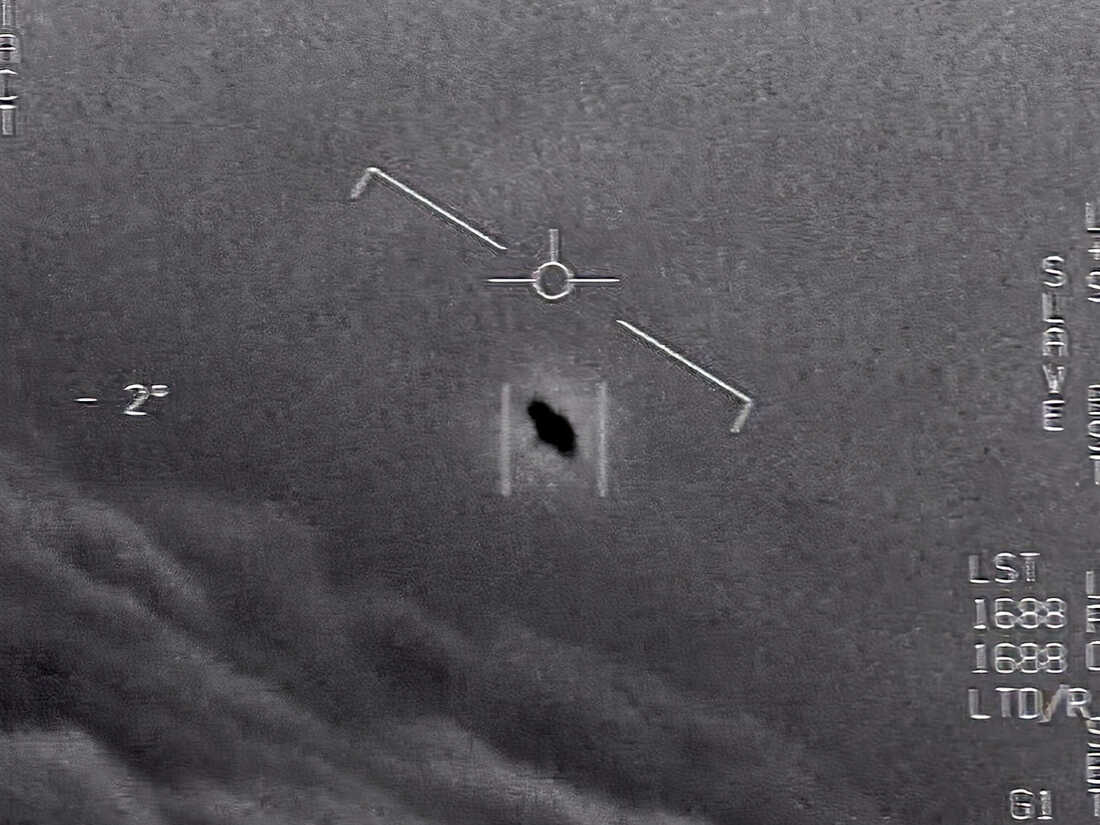
UFO's refer to any object or phenomenon observed in the sky that cannot be identified or explained. These unidentified objects have been reported by people worldwide, and investigations into UFO sightings have been conducted by governments, organizations, and researchers. While the vast majority of UFO sightings have conventional explanations, some cases remain unexplained even after thorough investigation. These unexplained sightings have fueled speculation and intrigue about the possibility of extraterrestrial life visiting Earth.

It's hard to believe that we are the only world with life in the  universe. The universe is observed to have a radius of billions and billions of light years thus far.  The concept of the universe's size can be challenging to understand. The universe is constantly expanding, and this expansion affects our perception of its size. I find it impossible to believe that there is no other life out there while considering the size of the universe that isn't even fully comprehended yet. I believe that there is life technologically more advanced than us. 

Scientific discoveries and investigations are ongoing, and as technology and observational capabilities advance, we may get closer to answering the question of whether life exists beyond Earth. As for UFO abductions it is hard to decipher whether the relayed information is accurate. This is due to the fact that recalling the past is not accurate and our memories are not an accurate depiction of the past therefor inaccurate recollection of an abduction.


Blog Post #3: The End of the World

    The end of the world has always been a concern of mine and everyone else. I was too young during the Y2K scare to understand what was happening, but I remember the 2012 Mayan prophecy for the world's end. I did not take the 2012 end of the world seriously as my parents were not concerned by already experiencing Y2K and just chalking it up to another false claim. I remember watching the 2012 movie and wondering if the end of the world would look like that if and when it happened. Though the 2012 movie was an over-the-top portrayal to gain the viewer's attention, I was so interested in the movie that I overslept the next day from staying up late to watch it. 

    I do not blame people for having doomsday bunkers and needing to protect themselves during an apocalypse. It is wise for people to feel the need to prepare and defend themselves however they see fit. With various people claiming that the world's end will happen every few years, I do not blame people for preparing for anything that might occur. Though none of my friends or myself have bunkers or poured thousands of dollars toward protecting themselves from the end of the world, I still have friends that feel the need to keep emergency resources and food stashed away in case something out of the ordinary happens. Anything can happen after what we all experienced these past couple of years in the world.


Graphology

 I think it's so cool that people can try to determine personality and character based on the way you write. Using the size you write in, slant, spacing and pressure, according to graphology, you can almost pick out someone's personality. It's really shocking that there is a correlation between how someone writes to how the are as a person. I find it very hard to be true actually and it seems almost like there trying to make something out of nothing. The fact that they did studies on this and found correlation is even crazier to me but I think it's so cool. But it does also say "graphology is one of the least effective predictors when compared to other personnel selection methods", which seems to make sense to me. Although it is a cool topic, it does not seem very reliable in my opinion. 

Blog Post #2: Ten Percent of Our Brains

     In the past, I have had people tell me that humans only use ten percent of our brains, which was stated to me as a fact. I found it interesting for the longest time until I learned that different brain parts control specific things. So how can only ten percent be used, and how come nobody has ever been able to tap into that? Though using ten percent of our brain is a myth, it is a fascinating topic to think about, which Hollywood has already discovered and made movies about. 

    Upon looking at the slides for our lecture, I had never heard of the movie Lucy, so I decided to watch it. The concept and story were fun to watch, but it seems ridiculous upon discovering it is a myth. I remember also watching the movie Limitless with Bradley Cooper, where a pill turned him into the perfect version of himself. Though it is a fun and exciting concept, it is purely fictional. Many people consider these ideas because they desire to be the perfect versions of themselves. Many people resort to tricks to prove they have psychic or telekinetic abilities and to turn people into believers. It is good to see individuals like James Randi proving to everyone that these abilities can be performed through illusions. It makes people consider what they are perceiving. Here is a link to a video that quickly discusses how brain function works and why using ten percent is a myth. 

Blog Post #1: The Jersey Devil

    Growing up around the pine barrens in New Jersey, I was always fascinated by stories and evidence of the Jersey Devil when I was younger. During Halloween, a couple of friends and I would walk around areas of pine barren and try to listen to any noises or shrieks in the night. I was always skeptical about the stories and evidence of the Jersey Devil, and growing up where it is said to be present, I have never found any evidence or reasons to believe that the Jersey Devil is real. The story of the Jersey Devil was told for over three hundred years and is still being discussed. I have always wondered how much has been made up or fabricated throughout the years, along with other stories from different states that pertain to the Chupacabra or Bigfoot.

    I find it shocking that the alleged sightings in 1909, where many people experienced having seen the Jersey Devil, had the power to stop people from working and going to school. I can only imagine how scared people must have been to leave their houses during this time. It makes me think about the people in the area who are either afraid of these stories or the type of people that make it a symbol of New Jersey and embrace and use the story on things like products and attractions. One sure thing, these legends will always be remembered and told throughout generations. Here is a video of a Rutgers professor discussing the legend of the Jersey Devil with his class and an example of a company that uses the Jersey Devil story to sell its products. 


Wednesday, August 2, 2023

Factfulness Book Report by Adil Akram

 Adil Akram

Professor Berg

Pseudoscience & The Paranormal

August 8, 2023


Overview: 

    "Factfulness" by Hans Rosling is an eye-opening and refreshing book that challenges common misconceptions and biases about the state of the world. Through engaging storytelling and data-driven analysis, Rosling effectively debunks prevailing pessimistic narratives and provides readers with a more accurate and optimistic understanding of global progress.

    The core message of the book revolves around ten "instincts" that hinder our ability to perceive reality objectively, such as the fear instinct, the gap instinct, and the destiny instinct. Rosling emphasizes the importance of data and critical thinking in combating these instincts and forming a clearer picture of global trends.

Favorite Part:

    One chapter that many I found enlightening is Chapter 7, titled "The Gap Instinct." In this chapter, Rosling discusses the common misconception that the world is divided into two distinct groups: the rich and the poor. He uses data to demonstrate that the majority of the world's population actually falls in the middle-income category, with a shrinking proportion living in extreme poverty.

    This chapter challenges the black-and-white thinking that often characterizes discussions about global wealth distribution. By revealing the significant progress that has been made in lifting people out of poverty and improving living conditions for billions, Rosling encourages readers to avoid falling into the trap of oversimplified, pessimistic views.

Related:

    Relating Factfulness to the content of this class brings me back to our first lecture, "Ways of Thinking." Considering this book allows readers to change their own way of thinking, the first lecture discuses just that. Especially in today's society, a lot of the information we as humans tend to lean on can sometimes be taken for only face value instead of conducting critical research to expand a topic. A lot of "fast thinking" is done due to convenience instead of "slow thinking" which can help us relate and understand the world.

Creative: 

Granted, this is a Ted Talk by Hans Rosling but I believe this video helps construct the main concepts of the book. 

https://www.youtube.com/watch?v=Sm5xF-UYgdg

Extension:

"Factfulness" by Hans Rosling is highly relevant to the real world as it addresses several critical issues related to how we perceive and understand global trends and challenges. Here are some ways in which the book relates to the real world:

  1. Dispelling Misconceptions: The book highlights the prevalence of misconceptions and biases that people often hold about the world. These misconceptions can impact decision-making, policy formulation, and public discourse. By presenting data and evidence, Rosling helps readers to question and overcome these biases, leading to a more accurate understanding of global realities.

  2. Promoting Critical Thinking: Rosling emphasizes the importance of critical thinking and fact-based analysis. In a world with an overwhelming amount of information and misinformation, the book encourages readers to approach information with skepticism, verify claims with data, and avoid jumping to conclusions based on anecdotal evidence or emotional reactions.

  3. Understanding Global Progress: "Factfulness" presents a positive and data-driven perspective on global progress. By examining data from various indicators such as health, education, and income, Rosling demonstrates that the world has made significant strides in improving the quality of life for many people. Understanding this progress is crucial as it shapes our perception of the world's challenges and opportunities.


Tuesday, August 1, 2023

Book Report - Viral BS

    I chose to read the book Viral BS by Dr. Seema Yasmin. The book was a collection of short stories of sorts that covered various phenomena throughout the years. The vast majority of these stories were directly related to human health and the medical field. An example of this that was used in the book would be a mother in the Midwest who was hysterical over her risk of contracting Ebola in America, but when prompted about receiving a flu vaccine, a disease she would be at a significantly higher risk for, she expressed complete disinterest.

Many of the stories in the book felt as though they were written to debunk common theories and misconceptions that fall in line more with showing the low risk of contracting Ebola in America. While the rest focused more on bringing awareness towards events and issues that American society as a whole pays little attention to, an example from the book being the rapidly rising maternal mortality rates in America. All of the stories contained within the book feature plenty of research-backed evidence that allows the reader to decide whether the public hysteria, or lack thereof, resulting from the subject matter is warranted or not. 


One chapter that stood out to me most from the book was one titled Can your cat’s poop make you better at business? This chapter covered a bacteria that thrives in cat poop called Toxoplasma gondii and would alter the mind state of rats, making them more likely to get caught by cats, in order to find their way to that environment. The studies from this chapter brought attention to the idea that if this bacteria was capable of altering the thought pattern of rats then perhaps it was having a similar effect on humans. 


The study referenced in this chapter was conducted in 42 countries over the course of 25 years where the countries that had a higher prevalence of people with antibodies to the bacteria had a “entrepreneurial activity and intentions at a national scale” as well as lower proportion of people who answered that they had a “fear of failure” when prompted. Overall the study implied the bacteria inhibited loss aversion in those who were infected making them more likely to make risky business decisions when the opportunity presented itself with those a benefitted from these decisions being more likely to be included in this study. However, handling cat poop and increasing the risk of contracting all forms of disease with the hopes of improving one’s business acumen can, in my opinion, only be described as fast thinking. As a result, I felt this chapter felt the most relevant to the course which is why it stood out more to me over all the others.


This article goes more in depth with how the Toxoplasma gondii affects our thought patterns and how we act as well as many of the more haphazard impacts it can have on our overall health. https://hbr.org/2022/07/a-common-parasite-can-make-people-more-entrepreneurial


The book concluded with a section which the author refers to as the BS detection kit which was a checklist of rules to follow to ensure that we can combat the spread of misinformation whilst still being able to keep an open mind regarding some of the more interesting stories we may hear in our day to day. Although many of these tips could be considered obvious I still find it something useful to keep in mind even outside the scope of the course.