Friday, February 3, 2012

Raving Lunatics:Does the Full Moon Affect Behavior?


People tend to look for reasons for the unexplained.  I have heard all my life that people act “crazier” around the full moon. The question at issue is do people really act peculiar around the full moon?   Supposedly, police stations get more criminals, hospitals see more bizarre scenarios, mental hospital patients need to be sedated, and the weirdness just comes out of people. I work at a liquor store and even I thought we had more people come in and act a tad insane on a full moon. There have been a few times that my boss has had to call the cops for a customer having aggressive behavior in the store on a full moon.  Could we just be looking for a reason for observing odd behavior? Does the full moon have an effect on behavior?  I will fully admit to myself that before I did this research I had an implication that if there is a full moon outside, than peoples’ moods would be more erratic.  My first theory was being that  the moon is full; it was possible that gravity “pulled” neurotransmitters or something like that which causes people to act differently.  Unfortunately, there is no information on this personal theory.
After researching this question, there was very little evidence supporting the claim that the full moon effects behavior.  Some information was found to support the claims. Tasso & Miller (1976) explained that rape, theft, assault, intoxication, disorderly conduct, and larceny were more frequent during the night of the full moon.  The researchers looked up criminal records that happened in a large city for one year.  One crime that was not consistent with the moon phase was homicide.  Most people would read this and look at it as proof. This study was conducted in 1976, and was never replicated.  This means that other researchers who tried to replicate this study did not find the same evidence. 
Frey, Rotton, & Barry  (1979) tried to replicate the original findings from the first article in 1979.  Their findings could not replicate the original study.  There was no significance between the full moon and human behavior.  They stated that if people such as police officers believe that they will arrest more people on a full moon, then they will act on that conclusion.  McLay, Daylo, & Hammer (2006) found no association between moon phases and psychiatric or emergency room admissions. 
My interpretation of this phenomena is if people consciously note the full moon at night and assume that people will act more peculiar than usual, then they will seek out to observe odd behavior.  This was also stated in the two articles that debunked behavior during the full moon.  There are many legends and myths about werewolves.  It is possible that we have embedded  infatuation with these mythical creates into our everyday human behavior.  According to research, there are no correlations between human behavior and the moon phases and it is just our imagination. 

References
Frey, J., Rotton, J., & Barry, T. (1979). The effects of the full moon on human behavior: Yet  another failure to replicate. Journal Of Psychology: Interdisciplinary And Applied103(2),  159-162.

McLay, R. N., Daylo, A. A., & Hammer, P. S. (2006). No Effect of Lunar Cycle on Psychiatric Admissions or Emergency Evaluations. Military Medicine, 171(12), 1239-1242.

Tasso, J., & Miller, E. (1976). The effects of the full moon on human behavior. Journal Of  Psychology: Interdisciplinary And Applied, 93(1), 81-83.

Trepanation


What is Pseudoscience and how does it relate to Trepanation?
Pseudoscience can be defined as a claim, belief, or practice that is presented as scientific, however it does not adhere to a valid scientific method because there are no planned studies or comparisons to rule out alternate explanations, no control groups, imprecise, scientific language, lack of supporting evidence or plausibility, and cannot be reliably tested which then lacks scientific status. These unprovable claims have no confirmation of their rigorous attemps to be evaluated rationally. The first chapter of this class we discussed, "What is Pseudoscience?"  Very briefly we discussed Peter Halvorson's depression cure most commonly known as Trepanation. (Trepanation can also be called trepanning, trephining, or burr hole.)  

What is Trepanation? Trepanation is a surgical procedure or intervention that drills or scrapes a hole into the huma skull which is meant to expose treat health problems related to intracranial diseases. It is often used to relieve pressure beneath a surface. Trepanation derives from the word trephine which is an instrument used for cutting out a round piece of skull bone.

 
What is the purpose or goal of Trepanation?
Prehistoric human remains from Neolithic times have shown cave paintings indicating that people believed that this practive would cure epileptic seizures, migranes, and mental disorders. The first trepanations were made because of religious motives and were manifested by the ideas of the supernatural because the  trepanation was aiming to remove the evil spirit in some diseases- insanity, epilepsy, and idiotism. The bone that was trepanned was sometimes worn as a charm to keep evil spirits away. Evidence throughout history has also shown that trepanation would be used as an alternate emergency for head wounds.  The ITAG (International Trepanation Advocacy Group) strives for individuals to reach their utmost potential and cnstructive participation in their own lives as well as the well being for the rest of the population.  The main goal of the ITAG or trepanation itself is that the modern intervention of making an opening in the skull of an individual's skull favorably alters movement of blood through the brain and improves brain functions. Peter Halvorson drilled a hole in the dront of his own skull to increase blood volume which is known to be the modern goal behind the trepanation procedure.  

Questions about Trepanation
Dr. John Clarke was one of the earliest American doctors who was allegedly the first physicisan to perform trepanning in the United States in 1664. Ever since the first procedure was completed there has been a great deal of discussion and debate as to whether or not these individuals who would even think of placing a hole in their skull are in the right frame of mind to make that decision for themselves in the first place. Can drilling a hole in skulls truly make a difference in the volume and capacity of blood flow that a person's brain can attain and transfer be accomplished by simply making a giant hole within their skulls? Claims of trepanation relieving stress, depression and demonic spirits resulted in the hole in these ndividuals heads for the rest of their lives. Concerns and questions have arisen time and time again. However, because this is a pseudoscientific acquisition and claim there truly is no type of scientific evidence and cannot be reliably tested with statistical answers and claims due to the fact that it simply is a matter of opinion if someone truly feels that drilling a hole in their brain will somehow make their stress, depression, or other mental issues dissipate.


Point of View

After viewing this video, it seems fairly clear that the news broadcasters feel a specific way towards these individuals who have received the trepanation intervention. The patients truly feel that this procedure has made a significant impact in their lives. Ultimately in my opinion, I find this subject to be very interesting in the fact that I do not understand the reasoning behind it. Quite frankly, I believe that anyone who would feel that drilling a hole into their skull (which would permit susceptibility toward their brain, which is what leads human beings to their potential being put in danger), to me may not know what is necessarily best for them to begin with. The rational thinking as well as logic seems a bit vague and almost non existent to these people.Maybe it simply is because I am ignorant to the philosophy of this intervention. Who knows trepanation could be a procedure that we are all missing out on that would truly make  our lives better, however, I am willing to take that chance and keep my skull untouched! 


Alien Encounters: Real or Just a Dream? - An Anecdote


When discussing the topic of paranormal events, questions on the topic of aliens always pique my interest: Do aliens, also known as extraterrestrial creatures, exist? If so, have they been on earth? What kind of proof do we have? A dear friend of mine, whom I will call "Fiona," to keep her name confidential, once told me that she believes she may have had an encounter with real aliens, despite a lack of an obession with them. After asking permission to use her story for a blog post, she sent me this long message explaining in detail:
"So when I was in the first grade, I was living in a duplex that was fairly creepy itself. My dad worked as a traveling salesman for a mattress company and my mother worked in a doctor's office as the nurse. He would often go away on trips and stay overnight. When he would do this, I would go sleep in their bed because thats just what little kids do.

"One night while he was away and I was sleeping in there. I was awoken because there was a light on. I originally thought it was my mother in the bathroom because the bedroom was connected to a master bathroom. When I sat up, I noticed the light was coming in from the skylight that was in the small hallway that connected the master bath to the master bedroom. It was extremely bright. Through the light, I could make out several tall standing objects. When they moved closer to me, I realized what they were.

"I looked for my mother, but she was not in bed with me anymore. I suddenly got afraid, but was immediately calmed down. It was like one of the beings had intercepted my mind and controlled my feelings. There were no verbal words spoken to me, but rather waves of feelings. The being told me to not be afraid, they were not here for me, they were not going to take me or hurt me, and my mother was alright. Again no words - just placement of feelings and thoughts. They told me to return to sleep and I would wake up and find that everything would be back to normal.

"I can still remember what they looked like. They weren't tall but they weren't short, though it was hard to gauge their height when I was that young. They were silvery and shiny, almost plastic looking. At times when they moved, their skin or whatever was on top turned very dark and dull. They had no mouth so I assumed they communicated telepathically. They had a depressed nose or what I assumed was a nose and very elongated heads.

"I woke the next morning and told my mother what had happened and she told me that it was a dream and nothing more. It felt very real to me. I can still remember it to this day and I still have an intense fear of aliens. I cant even watch ET without getting freaked out. As your father loves that part haha

"It gets more interesting because years later I found out that my mother had the exact same dream, except she was actually in the walk in closet that was connected to the bathroom. She believed they were interested in her because she had no uterus (since she had a hysterectomy after I was born due to various cancers in that region). She said that they visited her several times. They never hurt her, but were curious about her. The last time I was in the room with her, they did not expect me to be there. They did tell her that they werent hurting me, only calming me down. They told her that they werent coming back and they have got what they needed. She can describe them the same way I can from what they looked like to how they communicated.

"She said we didnt watch any shows or movies that involved aliens. She already has an intense fear of aliens and she claims it stemmed from the fact that my father on their first date, took her to see Aliens with Sigourney Weaver and she got freaked out and could not think/watch/hear anything about aliens.

"So truth be told, I still believe that something strange happened that night. We moved from that duplex several weeks later after we found another house."
Looking back at the question, we can analyze this story to see whether or not it supports the hypothesis asking if aliens exist.

First, we should check the information from the story. Fiona thoroughly described what the aliens looked like. From what she said, they were shiny and silvery, and possessed a medium height, elongated heads, and a depressed nose. Not surprisingly, these descriptions sound similar to depictions of aliens called "greys," displayed in the picture below. Fiona asserted this happened at a time, according to her mom, when the family did not watch alien movies/shows together that may have triggered such a dream to occur as a coincidence. Unfortunately, Fiona has no physical evidence (e.g. a ray gun, a flash drive with cryptic files, a book in alien language, etc.) that can serve as proof for her alien encounter, and confirmation that it was not just a dream. It was also noted that Fiona believed the aliens were controlling her emotions without speaking.
"Do not be afraid."
Second, we should examine the assumptions of this story. We may assume the information is correct, although it is possible that Fiona's long-term memory has been reconstructed over the years, taking on characteristics of new experiences and semantic knowledge for cohesiveness. Also, we are assuming Fiona believed the creatures, whether they were aliens or not, were definitely there, and not an optical illusion or a bunch of family members playing a prank. We are also assuming that her mom was telling the truth in that she really did have the same "dream." Finally, we are assuming that Fiona sincerely believes the aliens were truly controlling her emotions, not her unconscious operating in dream-mode.

Third, we should view the possible implications of this experience actually happening. If this really happened to Fiona, does that mean the majority of aliens are gentle, curious, and non-threatening? Or should we believe that most of them are like the nightmare-inducing creatures in the movie Mars Attacks, and this particular group was special? Could the alien encounter have been an omen of things to come? Perhaps the aliens Fiona and her mother saw were examining humans to ensure they were protected against the harmful subgroup of aliens. If Fiona and her mother truly did witness aliens, then did the first artists depicting "greys" see them as well? Conversely, if Fiona and her mother only dreamed about the aliens, what does it mean? If the alien encounter was only a dream, then humanity is likely to experience the ordinary earthy doldrums and keep dreaming of extraterrestrial drama.

In conclusion, a few inferences can be made in regards to this story. While it does not, by any mean, show proof of an alien encounter, it does not disprove the existence of aliens, either. We can infer that Fiona is most likely telling the truth about this story, because she noted that aliens frighten her. Thus, she would not have a logical reason to make up such a story. However, given the deep mysteries of the human subconscious, as analyzed by famous psychological theorists like Freud and Jung, it is easy for a skeptic to say that all of the incidents reported above could have been manifested by a very life-like, frightening dream. In my opinion, I am not very sure as to which answer is right. As much as I would like to believe in life outside of Earth, I will not be convinced until I see physical evidence.

 
"Hello, Earthling."


Image Source: Google Images

Phrenology


Could a bump on the back of your head offer a clue to your inner personality? This idea was a central theme in the pseudoscience known as phrenology, a discipline that involved linking bumps on a person's head to certain aspects of the subject's personality and character. Phrenology was developed by a German physician named Franz Joseph Gall in the late 1700s. Gall noticed that the cerebral cortex of humans was much larger than that of animals, which he believed was what made humans intellectually superior. Eventually, he became convinced that the physical features of the cortex could also be seen in the shape and size of the skull.

After examining the heads of a number of young pickpockets, Gall found that many of them had bumps on their skull just above their ears. He then suggested that the bumps, indentations and shape of the skull could be linked to different aspects of a person's personality, character and abilities. With the young pickpockets, for example, he suggested that the bump behind their ears was associated with a tendency to steal, lie or deceive. Gall sought support for his ideas by measuring the skulls of people in prisons, hospitals and asylums, especially people with odd-shaped heads. Based on what he found, Gall developed a system of 27 different "faculties" that he believed could be directly diagnosed by measuring specific parts of the head. He created a chart that showed which areas of the skull were associated with specific traits or characteristics.

The 27 "Faculties" in Phrenology
Reproductive instincts
The love of one's offspring
Affection and friendship
Self-defense, courage and fighting
Murderous instincts
Guile, acuteness, cleverness
Sense of property, the tendency to steal
Pride, arrogance, haughtiness, love of authority, loftiness
Vanity, ambition, love of glory
Circumspection, forethought
Aptitude for being educated
Sense of locality and place
Recollection of people
Verbal memory
Language ability
The sense of colors
Sense for sound and musical talent
Mathematical abilities
Mechanical abilities
Comparative sagacity
Metaphysics
Satire and wit
Poetic talent
Kindness, compassion, sensitivity, moral sense
Imitation and mimicry
Religiosity
Perseverance, firmness

However, Gall's methods lacked scientific rigor and he chose to simply ignore any evidence that contradicted his ideas. Despite this, phrenology became increasingly popular from the 1800s well into the early 1900s. Gall's ideas gained many followers, but he began to attract criticism from scientists as well as from other groups. The Catholic Church believed that his suggestion of a "religion organ" was atheistic, and in 1802 his publications were added to the Index of Prohibited Books. After Gall's death in 1828, several of his followers continued to develop phrenology, taking it from Gall's attempts at science into something of a cult.

Despite phrenology's brief popularity, it eventually became viewed as a pseudoscience much like astrology, numerology and palmistry. Criticism from some of the best-known brain researchers played an important role in the reversal of popular views of phrenology. In 1843, Pierre Flourens, a French physiologist, founder of experimental brain science and a pioneer in anesthesia, found that the fundamental assumption of phrenology - that the contours of the skull corresponded to the underlying shape of the brain - was wrong. In his Elementary Treatise on Human Physiology, another physiologist, Francois Magendie, summed up his dismissal of phrenology by writing:

“Phrenology, a pseudo-science of the present day, like astrology, necromancy, and alchemy of former times, it pretends to localize in the brain the different kinds of memory. But its efforts are mere assertions, which will bear no examination for an instant. “

While phrenology has long been identified as a pseudoscience, it did help make important contributions to the field of neurology. Thanks to the focus on phrenology, researchers became more interested in the concept of cortical localization, an idea that suggested that certain mental functions were localized in particular areas of the brain. While Gall and other phrenologists incorrectly believed that bumps on the head corresponded to personality and abilities, they were correct in believing that different mental abilities were associated with different areas of the brain. Modern research methods allow scientists to use sophisticated tools such as MRI and PET scans to learn more about the localization of function within the brain.

- Jessi Guenther

Tarot Cards

Oh, tarot cards! I know it's complete non-sense, but I will admit to laying on my bed, shuffling my deck of tarot cards and having a blast "reading" the future. So, here's a little basic information about the tarot cards. In English speaking countries they are primarily used for divination purposes. Divination is the practice of seeking knowledge of the future through supernatural or mystical means. This practice of using the cards for divination purposes dates back to the 18th century. In the deck of cards there are 78 cards. These 78 cards are broken down into 2 categories. Major and minor Arcana. So, you lay out the cards in a certain set up, and then your read the meanings. I've heard lots of funky things about what to do and what not to do with your deck of tarot cards. I've heard that you should carry them with you so they become "attached" to you. I've also heard that you should never let anyone else touch your cards. The purpose of the cards is for you to take time, and try and use the cards to seek information about the future, the past, relationships and the like. It's like having a fortune teller at your disposal. Personally, I have a skewed point of view. I know that these cards are completely silly; but I've also had some pretty cool experiences with them. I've done readings for people that have had some serious connections. It's been my experience that people can have some very strong reactions to the things that the cards "say". Now, I've done these readings as a friend, so I've never made any money off of it. There are some pretty hefty implications to people making a profit off of this type of service. Sometimes, people resort to these types of practices out of desperation. For example, the people who call psychic phone lines. And I think that it's morally wrong to take advantage of someone like that. Making a profit off of someone's desperation isn't okay. But like I've said, it's different when you have fun doing it, but a completely different ball game when you're taking advantage of someone's dyer need for information.

-Holly Pimpinelli

You are Getting Very Sleepy

I remember when I was in high school, we had a hypnotist come to our school and preform a show. He called members from the audience, got to go on stage and be hypnotized. Very comical, as the hypnotist got some of the students to do crazy things. I could never really understand how he could get people to do embarrassing things in front of large crowds. So my question is...does it really work, or is it all "suggested?"

A short definition: Hypnosis typically involves an introduction to the procedure during which the subject is told that suggestions for imaginative experiences will be presented. The hypnotic induction is an extended initial suggestion for using one's imagination, and may contain further elaborations of the introduction. A hypnotic procedure is used to encourage and evaluate responses to suggestions. When using hypnosis, one person (the subject) is guided by another (the hypnotist) to respond to suggestions for changes in subjective experiencence, alterations in perception, sensation, emotion, thought or behavior. Persons can also learn self-hypnosis, which is the act of administering hypnotic procedures on one's own. If the subject responds to hypnotic suggestions, it is generally inferred that hypnosis has been induced.

I do not believe that one can be cured of all phobias just by being in a hypnotic state. Some information out there shows that to some extent, it really does work. But to the people it worked on, did they really have the phobia in the first place? Not only does it "remove" fear from one person, but it also is said to help quit smoking, reduce weight loss, and helps with "hysteria" and psychoanalysis.

According to Neuropsychology, "Neurological imaging techniques provide no evidence of a neurological pattern that can be equated with a "hypnotic trance". Changes in brain activity have been found in some studies of highly responsive hypnotic subjects. These changes vary depending upon the type of suggestions being given."


So, try it yourself. See what you believe..

Are you open to suggestibility?

Hypnotize yourself at

http://www.youtube.com/watch?v=CnU2Ld1ttoE


- Brian Kopf

Visitors, From the Outside.. WHOAAA!!!

Do you know where the human race began? The evolutionary timeline of homo sapiens goes back a long way. Throughout that time, we can only remain skeptic to claims of religion and scientific theory. I wanted to write about the notion or belief in the Anu Nakis: alien visitors who are believed to be the ancestors of humans and possibly the missing link to our higher intelligence. Zacharia Sitchin is the author of a number of books that propose the theory of ancient aliens coming to Earth and spawning a new species (man). He written numerous novels about religious accounts/interpretations in the Sumerian text where visitors came from a distant planet to Earth and populated it with an inferior race of animals to mine gold for their benefit. It is the story of the Anu Nakis who are the superior alien visitors far back in time when their planet's atmosphere (The Twelfth Planet), that was being depleted because of extreme levels of penetrating radiation and other global issues. His interpretation of the texts from early man (mostly Sumerian but not limited to) state that the Anu Nakis only defense against the radiation was to create a shield of gold around their planet, or atleast in some way to fend off the high levels of radiation from their nearby star. To do so, some of their people came to Earth, genetically manipulated a native species (monkeys or primates) and produced workers who could mine the gold needed for their planet. There seems to be no concrete evidence in Sitchin's claims and his novels have been ridiculed for many decades

Now this may all seem bogus and many do believe that Zacharia Sitchin only wrote these books for the business of science fiction, which in turn, made him farely wealthy. But in reading his interpretations, and with the science we're able to perform today, (gene splicing, cross breeding plants and animals as well as the fact that gold is used on the space shuttle to protect the astronauts from radiation) there's room in the story for fact. As for me and believing in the claims, I cannot dismiss the story as truly fiction. We do not know the exact origin of humans but there are numerous theories to how we, humans with our intelligent brain capacity and capability, came to be. Whose to say aliens didn't play a part? It's something to think about.

Zacharia Sitchin's page: www.sitchin.com

You can also type in "Nasa's use of Gold" in Google and find links for it's benefits in Space.

http://youtu.be/MDHp5Bdqh0c

Thursday, February 2, 2012

Kinoki Detox Footpads


I remember years ago I saw advertizements for this product and I knew there was no way it could work. The goal of the Kinoki (notice the Japanese name implying ancient knowledge, that they even mention in the commercial) Detox Foot Pads is to remove toxins and heavy metals from the bottom of your feet all during your sleep. This sounds great right? Watch the commercial!

http://www.youtube.com/watch?v=exmEGrNqgcA

Notice the information given in the video, they remove everything from your body: from toxins, heavy metals, and parasites, to cellulite all thru your feet! They even show a dirty used pad, granted I could get the same effect from a piece of duct tape. In the commercial they site the ancient concept of Japanese reflexology which is just a fancy theory on how to massage your feet to revitalize your energy.

The question is do they work, it seems clear that they do not. The last straw for me during the commercial that made me lose any hope at all in the product was during one of the testimonials where the man comments on how the FOOT PAD removed asbestos from his body. Wait? That is not physically possible! You can breathe in asbestos and it causes cancer because it stays in your LUNGS, how can it get through your body and out your FEET? So from that one statement out of many absurdities I conclude that this product is a bunch of pseudoscience mumbo-jumbo.

-Mike Stopen

Alchemy


            The question I would like to discuss is whether or not modern sciences, specifically chemistry, have a little gratitude that must be paid to the alchemist of the past. Alchemy is often thought of as black-robed quacks who performed magic. Other terms often associated to them are wizards, magicians, witchcraft, magic, and voodoo. 
            One must look at the information needed to fully think about this question. Alchemy is often associated with gold. Yes, it is true that a big part of alchemy was devoted to turning "impure" metals into gold. However, this is not the only thing alchemists were concerned with. Alchemy was inspired by the idea of man being perfect, free from disease and the limitations of our bodies. This is how their work on metals also began. Gold was seen as the "perfect metal" with silver following closely behind it. So why wouldn't they try to transform the "imperfect" metals into these perfect metals? Other subjects of interest to the alchemists were the Elixir of Life, Philosopher's Stone, Fountain of Youth, and the Powder of Transmuting.
            Alchemy was also based on a lot of concepts that should be considered. As stated earlier, alchemists were seeking after human perfection. The problems that they targeted were reasonable, but they then took them a step further that took their practices in the direction of magic. The Elixir of Life was meant to cure all diseases. Everyone has heard of the phrase fountain of youth, so I will not further explain this one. The Philosopher's Stone was the most sought after alchemical theory. This stone would allow the Alchemist to live forever and turn the base metals into gold. The Powder of Transmuting was also a powder that allowed Alchemists to transmute base metals into gold. This could be obtained without the Philosopher's stone. However, no alchemists was able to successfully turn any base metal into gold. Furthermore, the Philosopher's stone was never successfully created nor found. However, some of the practices that the alchemists performed in order to create or understand these concepts are still used today.
            My point of view is that the concepts they sought after were definitely on the magical side, using no scientific bases, but the techniques they practiced are still used in our modern day chemistry. Three contributions to chemistry from the alchemists are lab techniques, use of synthetic medicine, and even some lab tools. Lab techniques discovered by alchemists are filtration, distillation, crystallization, extraction (anyone who has taken organic chemistry at Stockton knows how often these techniques are used), along with others. The idea of synthetically created medicine is also created to Alchemists. Before Paracelsus (an alchemist), only organic plants were used to treat diseases. He believed that minerals synthesized in the lab would be useful for medicine. However, his work went unnoticed for over a century after his death. Even still, his work laid the foundation to this new idea. Lastly, many glassware and lab tools are credited to the alchemists that are still in use today. Even some basic chemicals used by the alchemists in their search for Elixirs and the Philosopher's Stone are still currently used in the lab today.

         In conclusion, although the interests that sparked the research of alchemists is without a doubt tied to magic, their searching laid down the foundations of chemistry today. Without the frame work laid down by the alchemists, chemistry would not be as advanced as it is today. Someone had to start somewhere, and the alchemists certainly did a decent job for chemistry as we know it today. 
Links:
1. http://www.chm.bris.ac.uk/webprojects2002/tubb/history.htm
2. http://www.alchemylab.com/history_of_alchemy.htm
http://www.cwu.edu/~scied/nctmworkshop/historychemistrytechnology.pdf

Wednesday, February 1, 2012

Acupunture


Some people will go to the extreme to lose weight or relieve stress that occurs in their lives. Many people try acupuncture to help them make their lives easier. I personally have not tried acupuncture to help me with weight loss or problems in my life, but I do know that people swear by it. My point of view is that I don't think acupuncture works. I think people star to believe that it works and therefore they continue to use it as a "medicine". The question that arises is does acupuncture really work?
Some information about this alternative medicine is that it was originated from China. The Chinese believe that we have this spirit or energy in our bodies called qi. To help balance this entity out, the Chinese would puncture the skin in the area where we have acupuncture points. It is said that sticking these thin needles could prevent bad health, treat infertility and relieve stress/pain (Wikipedia).

I read that acupuncture would help reduce nausea and vomiting after patients went through chemotherapy for cancer. Scientists have found that acupuncture calms the area of the brain that processes pain, subside inflammation and keeps the blood flowing.

Some cons to acupuncture are that it has lead to fatalities where the point of insertion got infected and that the needles hit vital organs. Scientists did experiments with volunteers where they were pricked with toothpicks and then real acupuncture was used on them. The results showed that the brain showed calmness when both experiments happened. Therefore, the placebo affect happened for most of the volunteers.

I interpret that there are scientists who will never agree on the concept about acupuncture. Many scientists believe it works while others do not. Therefore, I believe that many people have the placebo affect and that it does not work. To many fatalities have happened and infections. In conclusion, until acupuncture is proven to work without other evidence against it, I will stick with my belief that it doesn't work.

Tuesday, January 31, 2012

Astrology

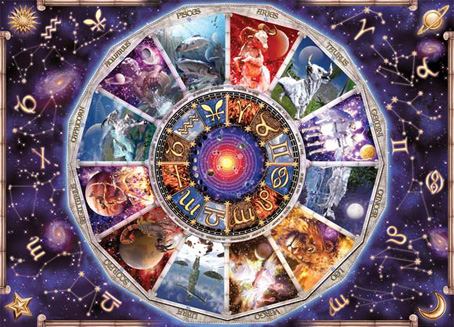
Astrology is “the study of the supposed influences of the stars and planets on human affairs by their positions in relation to each other” according to the Merriam-Webster’s School Dictionary.  Some information on this topic includes how according to astronomers, the signs of the zodiac refer to constellations of stars which are used as a sort of road map for looking into space, not an insight into human behavior.  The point of view of astrologists is that by mapping out the movements of the celestial bodies, they can predict human behavior based on when someone was born.  Astronomers disagree based on the facts that the constellations of the zodiac are too far away from earth to have any real affect on us.  The stars of the zodiac are not even in our solar galaxy, and therefore do not even effects us gravitationally, let alone by a mysterious force that affects behavior. 
The assumption of the horoscopes produced by astrologists is that they will be correct in their predictions.  The consequences of this assumption can be that they turn out to be true, either by coincidence or by will of the believer reading the horoscope, or the prediction will prove to be untrue.  The possible negative consequence comes when the believer does something risky to make the prediction true, this could include investments that turn out badly later on.  On the popular astrology website there is a disclaimer that notes that the information that can be found should be used only for entertainment purposes. 
The question at hand is whether or not astrology can be considered a substantial science.  According to science it is not a science because the readout of horoscopes cannot possibly be true based on scientifically based fact and statistics.  One example of statistics is asserted here, and the scientific information was gathered from Professor Sowers of General Astronomy here at Stockton. 

Monday, January 30, 2012

Midge, the Spiritual Advisor


I've always been the type of person to believe in spirits, but to be cautious.  After a few months of hearing my friends go to this psychic, I had to see what it was all about.  I reluctantly decided to call Midge.

The main assumption I had, was that I was going to walk into this woman's house, and she was going to scream that I was the devil and not welcome, my tarot cards would be bad, or I was going to die soon.  Obviously, I also had the normal ideas that she would beat around the bush and would tell me the obvious, "You're going to get married", "You're going to have two kids" etc.  Even though I have friends who swear by Midge, I was not a firm believer until I saw it myself.

I'm so glad I took this opportunity because I loved my experience.  Once I arrived at her house, I decided I was going to be open, and optimistic and I am so glad I did.  I knew from the get-go that I was not going to answer questions, or give more information than I should, to assure Midge was the real deal.  Before our session, I told her my name and my birthday, the rest of the session was all her and the "spirits" doing.  My experience was very positive and eye opening to new things.  I was very lucky, with having all my cards and "fortunes" coming up positive, and prospourous. The one thing that truly made me a believer was when she was "speaking" with my Grandmother who passed away 3 1/2 years ago.  She told me things only she would know. We talked for over two hours, about my past, my future, stress and about my family.  Midge was telling me things going on with my family that no one else would have known. 

Other than my experience, there are many different kinds of mediums and psychics out there and on television today.  You may not know exactly what a psychic, or medium, is or does.  Some basic information is that a mediumship is defined as the practice of certain people, known as mediums, to mediate communication between spirits of the dead and other human beings.  While no evidence has been accepted by the wider scientific community in support of the view that there has been communication between the living and the dead, some parapsychologists say that some of their research suggests that such communication may have taken place.  More about the technical definitions can be found on Wikipedia


In conclusion, I'm just saying to have an open mind.  Times have changed, no longer do we have to have a séance, with crazy candles and languages, now we can sit at a dinner table and have conversations with other spirits.  Even if you experience a psychic or medium just for fun it was an exhilarating experience.  I cannot wait to do it again.  But, my interests sparked way before my friends told me about Midge by just watching television shows about the paranormal. 


This video is from a television show on A&E, Psychic Kids.


-Jenny Robertson

Saturday, January 28, 2012

USO's and the Baltic Sea


The purpose of this blog was to spread the knowledge of deep sea UFO’s which are also known as USO’s, Unidentified Submerged Objects.  Many people talk about UFO’s, but rarely mention USO’s.


The world’s waters have not been completely explored and sightings have been around for years.  In my point of view, if USO’s are real, I wouldn’t be surprised, but if they aren’t it’s still a fun thought to entertain.

According to the History Channel’s UFO Files: Deep Sea UFO’s episode, in 1492 Christopher Columbus wrote in his journal an eye witness account of a USO.   They also mention that the world’s only government documented USO incident happened in Nova Scotia, Canada on October 4, 1967.  “Witnesses reported seeing an object 60 feet in length moving in an easterly direction before it descended rapidly into the water, making a bright splash on impact.” (http://www.collectionscanada.gc.ca/ufo/002029-1500.01-e.html)


To watch the full episode of UFO File’s go here: http://video.google.com/videoplay?docid=-5915586075736046554


The latest USO sighting I could find happened this past June.  Here’s a Fox News Clip: 


While searching for deep sea treasures, a team of ocean explorers from Sweden ended up finding a UFO-like looking object instead.
 

Information obtained on the ocean explorer website shows that the object was found at 285 ft (87 meters) below the surface of the Baltic Sea between Sweden and Finland.  The leader of the ocean explorer team, Peter Lindberg, claims that the object is 197 ft (60 meters) in diameter and forms a complete circle.  He also says that next to object, there is a 1000 ft (300 meters) slide track.


Some people compare this found object to Han Solo’s ship in Star Wars, the Millennium Falcon


I for one cannot explain the slide track next to the object, but for my interpretation and inference of the photographs I feel it looks like a rock formation that is aesthetically similar to the Millennium Falcon.  Lindberg and his team are currently fundraising for another diving excursion to unmask this mystery.   

Do you think it’s a USO?

For more information:

Here is a link to a great website that has listings of some radar/sonar reports of possible USO’s:
http://www.waterufo.net/radson.php

Here’s a link to world maps of reported UFO sightings.  For whichever hemisphere map you choose to look at, if you look at the bodies of water around the continents, the dots indicate a USO sighting.

If you want to follow the ocean explorer’s team, you can check out their official site here:

Tuesday, January 24, 2012

Mozart's Effect

“The Mozart Effect”: An Example of the Scientific Method in Operation
            Baby and child geniuses. We all see them youtube, on TV, or in other parts of the media showing off their big talents and brain skills in completing puzzles, retaining and understanding knowledge of extensive subjects, etc. Nowadays, with ideas such as these within the media, some parents, and even future parents, are trying to figure out ways to make their child “gifted”. One of the ways parents tend to do, besides provide healthy nutrition and care for their child, is to expose them to classical music. In today’s market, there are hundreds of companies targeting customers in the lure and promise that their child will develop an intellectual, memory, and creative development if they listen to their CDs or watch the BluRays or DVDs. In the midst of the modernity of the 21st century there are now even Ipad and Iphone applications that are specialized to help the child be exposed to classical music in the hopes that they will become smarter. This idea is known as the “Mozart Effect”. The question at issue is does this "Mozart Effect" actually represented by scientific reasoning and the scientific method, or is it just a false theory? “The Mozart Effect” is an example of pseudoscience.
             One way that pseudoscience is different from regular science is that pseudoscience does not follow the scientific process. One of the biggest aspects of the science process, discussed in Chapter 1 of our textbook, Scientific Perspectives on Pseudoscience and the Paranormal, is that scientists must be able to replicate the results or conclusions of studies done by other fellow scientists. The original finding of the Mozart Effectm, a study done by Rauscher, Shaw, and Ky back in 1993 reported that students showed “an increase on spatial reasoning scores of about 8 to 9 IQ points from substest of the Stanford-Binet Scale of Intelligence after listening to a Mozart piano sonata relative to listening to a relaxation tape or silence”
            Although this scientific experiment was done in a controlled environment, this study was made famous due to assumptions. The first mistake was to see that correlation indicates causation, meaning that if two objects, actions, or things are related to each other, i.e., correlated, than it is reason to say that they cause one another. This is not necessarily true.  For example, what if one day I decide to get yummy hot chocolate from Dunkin Donuts.  I go home, and scarf it down in the cold weather. Later, I get severely sick and have a stomach virus. Is it safe to say that the hot chocolate caused me to become sick? Not necessarily.  I later read that other individuals have also gotten sick due to this infamous hot chocolate. Just because I drank the hot chocolate, and others as well, does it really mean that is the only cause to my, as well as others’ sickness? Probably not. I would have eaten and drank a lot of other things that day that could have also been part of my diet that could have also gotten me sick. Thus, correlation does not indicate causation. We often also use this mistake in health-related studies. Often there are health unkies who drink excess protein shakes and vegetable juices under the assumption that it will lower their chances of cancer, etc. Most of these studies are correlational studies, not causational. Thus, correlation and causation implies false hope. If we constantly make correlations the cause of other items than our world would not have the open-mindedness that we have in today's society. Think about it! What if every court case in America immediately assumed that correleation indicates causation. Many more individuals would probably be in jail for being at a scene of a crime- i.e. correlated to the crime scene, but did not cause it. Correlation and causation play a big role in our everyday society.
       A second indicator is that people made this one case famous without replicating it for it’s reliability. This goes against the concept of scientitific reliability. That is, if a scientist gets those same results again and again, than it can be made true. Ideally, it should be other scientists that are able to replicate another individual's study and get the same results,, than the study can be considered true. For example, let us take the concept of gravity. Millions of scientists around the world have proven that gravity does exist- i.e. there are studies out there that makes gravity a plausible scienttfiic theory.
             Going back to our study,  In 1995, when other individuals such as Cartsens and his colleagues decided to replicate the Mozart Effect, they found that there was no difference in performance on a Minnesota Paper Form Board Test between those who had listened to Mozart before (the experimental group), than those who meditated in silence (the control group). Thus the Mozart Effect appeared to not have an effect on these children. Another scientist, by the name of Newman, studied with his colleagues a group of students who either listened to a Mozart sonata, a relaxation tape, or sat in silence and then later were tested on questions from the Ravens  Progressive Matricies. Newman also found no Mozart effect. Steele, Bass, and Crook (1999) replicated Raucher’s experiment and came up with the same similarities as Cartsens and Newman- the Mozart Effect, indeed did not work.
            So then why the hype? In other words, why do people still stick with this point of view that the Mozart Effect works when it does not? A large part of it comes from the market and media trying to sell products. Every parent wants a child to succeed in life and many will do whatever it takes to help their child reach the potentional they see fit. So, markets often manipulate studies and make false claims in the hopes that parents will buy these CDs, DVDs, etc. so that they make a profit. Even famous companies such as Disney market on the Mozart Effect in the hopes to get better media ratings, such as with their show Little Einsteins in which cartoon characters play musical instruments and classical music while your child listens and engages in their activities.
            Some parents, although learning and acknowledge that the Mozart Effect still has to be tested, continue to buy into these items. Perhaps it is a sense of hope and faith that their child will become a genius and get them famous that keeps parents constantly buying more “intellectually stimulating music.” One thing is for certain though: although the Mozart Effect may not truly exist, some children do have a positive impact while listening to music. Such as this one:


Lawson, Timothy J. "Chapter 2.4 "The Mozart Effect"" Scientific Perspectives on Pseudoscience and the Paranormal: Readings for General Psychology. Upper Saddle River, NJ: Pearson, 2007. 39-45